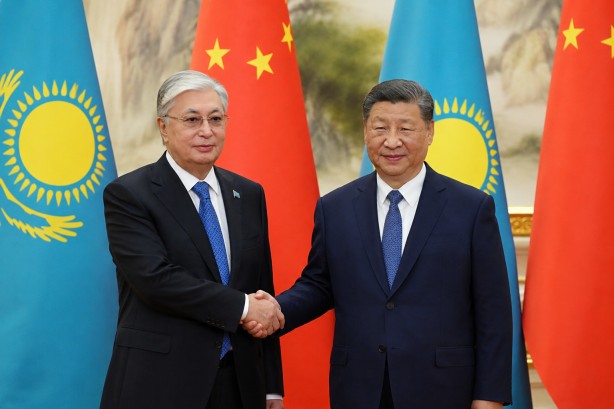
During the 2026 World Artificial Intelligence Conference in Shanghai, Chinese President Xi Jinping engaged in discussions with Kazakhstan President Kassym-Jomart Tokayev to reinforce the robust strategic partnership between their nations. The meeting underscored a mutual commitment to enhancing cooperation across various sectors, with a focus on aligning development strategies. President Xi highlighted the potential for deeper collaboration in key areas such as trade, cross-border e-commerce, energy, and transport. Additionally, he advocated for joint efforts to advance initiatives in the digital economy.
Xi’s agenda extended beyond economic collaboration, as he emphasized the importance of working together in fields such as artificial intelligence, education, healthcare, and science. He also stressed the significance of cultural exchanges and cooperation on multilateral platforms like the United Nations and the Shanghai Cooperation Organization. This comprehensive approach reflects China’s broader strategy to foster strong regional alliances and enhance its influence on the global stage.
President Tokayev reciprocated by acknowledging China’s pivotal role in Kazakhstan’s foreign policy landscape. He voiced his support for expanding partnerships in trade, investment, transportation, agriculture, and energy. Tokayev also expressed a keen interest in the governance of artificial intelligence, a domain that is rapidly evolving and holds significant potential for both countries.
Following their discussions, the leaders of China and Kazakhstan witnessed the signing of several pivotal cooperation agreements. These agreements spanned various sectors, including trade, transport, finance, and media, marking a concrete step forward in the bilateral relationship. The accords aim to facilitate increased interaction and mutual benefits, further cementing the ties between the two countries.