
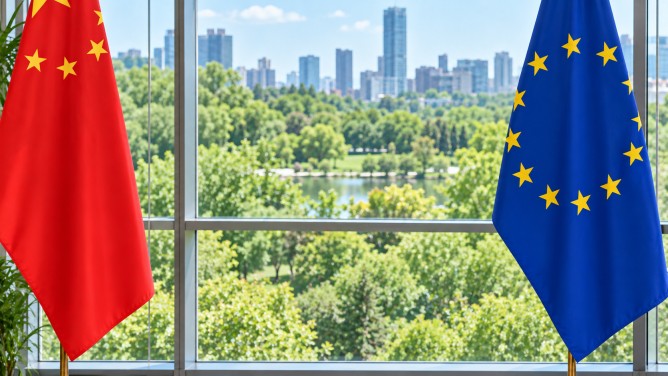
Amidst the backdrop of the 17th Conference of the Parties to the Convention on Biological Diversity (COP17) in Yerevan, Armenia, China and the European Union have reinforced their commitment to tackling significant global environmental issues. China’s Minister of Ecology and Environment, Huang Runqiu, and Teresa Ribera, Executive Vice-President of the European Commission, met to discuss enhancing cooperation on climate change, biodiversity conservation, and plastic pollution control.
The discussions underscored the importance of the China-EU High-Level Environment and Climate Dialogue, focusing on global biodiversity protection and the ongoing negotiations for an international agreement on plastic pollution. The two sides also prepared for the upcoming 31st United Nations Climate Change Conference (COP31). Huang highlighted the longstanding constructive collaboration between China and the EU in environmental protection and climate action, emphasizing the need for strengthened communication and the implementation of existing agreements.
A significant part of their discussions revolved around the Kunming-Montreal Global Biodiversity Framework. This framework sets ambitious goals for nature protection, including the restoration of at least 30% of degraded terrestrial, inland water, marine, and coastal ecosystems by 2030. Both parties expressed a strong desire to work together towards achieving these targets and contributing to effective global environmental governance.
Huang expressed optimism about the outcomes of COP17 and COP31, hoping for positive contributions from China and the EU in improving environmental governance worldwide. Ribera, acknowledging China’s contributions to environmental protection and climate negotiations, voiced her support for ongoing dialogue and closer cooperation between the two regions on these critical issues.
This renewed commitment from China and the EU highlights the significance of their partnership in advancing international environmental agreements and fostering a more sustainable future. Their collaboration serves as a vital component in addressing pressing environmental challenges such as climate change, biodiversity loss, and plastic pollution.