
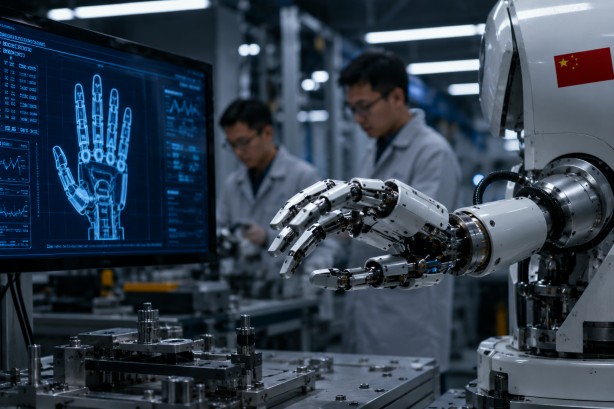
In China, the race to create advanced robotic hands is gaining momentum as companies strive to overcome one of the most intricate hurdles in the development of humanoid robots. These efforts are spearheaded by startups that are leveraging artificial intelligence alongside China’s robust manufacturing capabilities. The goal is to engineer robotic hands that can deftly handle tasks that require a fine touch, such as grasping items, operating tools, and managing routine activities. This technological breakthrough is pivotal for making humanoid robots viable for domestic use, healthcare services, and industrial applications.
Crafting robotic hands that mimic the dexterity and precision of their human counterparts presents a formidable challenge, experts note. The complexity of this task surpasses that of constructing other components of humanoid robots. Developers are tasked with overcoming hardware hurdles, such as developing compact motors and sensors, while also addressing software challenges that enable robots to perceive and react to touch, pressure, and intricate motions.
China has positioned itself as a powerhouse in the robotics manufacturing sector, thanks to its advanced supply chain infrastructure and a government-endorsed emphasis on “embodied AI.” This burgeoning robotics ecosystem within the country is fueling a surge in innovation. Companies are not only focused on the development of robotic hands but also on creating wearable sensor gloves and AI systems designed to learn human movements through extensive real-world data collection.
Researchers highlight that enhancing the dexterity of robotic hands is a crucial step towards equipping robots to perform a diverse array of everyday tasks. These tasks range from domestic chores to industrial operations and even sophisticated prosthetic applications. The ability to execute such a wide variety of functions could significantly impact multiple sectors, paving the way for humanoid robots to integrate more seamlessly into daily life.
Industry leaders are optimistic that ongoing advancements in artificial intelligence and robotics will eventually lead to humanoid robots that can interact more naturally with humans. Such progress is anticipated to unlock new possibilities in manufacturing, healthcare, and consumer services, fundamentally transforming how we engage with robotic technology in various aspects of life.