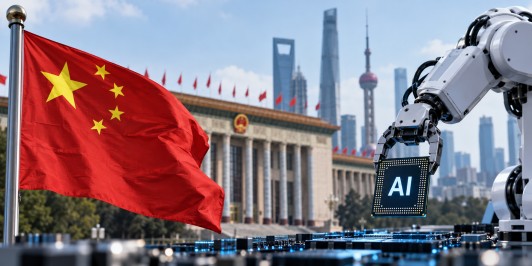
China has dismissed calls to limit its development of artificial intelligence, labeling such efforts as driven by fear and cautioning that antagonism could harm international cooperation in the tech sector. This stance comes amid growing concerns from the United States regarding China’s swift advancements in AI technology. Critics warn that China’s lead in this field could pose significant security and geopolitical challenges.
The Chinese Foreign Ministry advocates for global collaboration in AI development and regulation, emphasizing that confrontation and fierce competition could hinder the creation of international standards for the technology. While China refutes the notion that its AI progress is inherently threatening, it simultaneously acknowledges the potential risks associated with the rapid evolution of powerful AI systems.
Chinese leadership underscores the importance of maintaining human oversight over artificial intelligence. Nevertheless, security officials in China have issued warnings about the potential for AI to be exploited for large-scale information, propaganda, and cyber operations, which could jeopardize national and political security. Concerns have been raised specifically about the misuse of sophisticated AI models, which could introduce new challenges in cybersecurity and information security.
This ongoing debate reflects the escalating tensions between the United States and China over dominance in the AI sector. Both nations are heavily investing in developing advanced AI systems while implementing measures to safeguard national security and technological superiority. The disagreement also underscores a broader global discourse on how governments should regulate increasingly capable AI systems. Some experts and tech leaders advocate for heightened safeguards and international cooperation, while others caution that overly stringent restrictions might inhibit innovation and exacerbate geopolitical divides.
US and Chinese officials are anticipated to address AI governance and related technological matters during a scheduled meeting later this month. Meanwhile, Chinese state media have criticized efforts to decelerate AI development, suggesting that initiatives to curb China’s tech progress may be part of a larger strategy to contain its ascent in the global technology arena.