
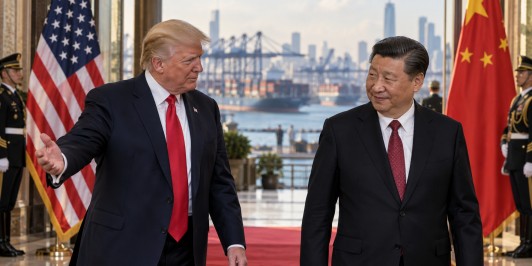
Amid ongoing trade tensions and strategic uncertainties between the United States and China, Chinese President Xi Jinping has commenced a significant state visit to Washington. The visit underscores the efforts by both countries to navigate a complex bilateral relationship that is pivotal to global economic and technological landscapes.
Upon arrival at Joint Base Andrews, President Xi received a warm welcome from U.S. President Donald Trump and First Lady Melania Trump. The ceremonial reception included military honors, the display of national flags, and a flyover by U.S. B-1 bombers, highlighting the importance both nations place on this diplomatic engagement.
A key development during Xi’s visit is the extension of the Busan agreement, a temporary measure aimed at easing trade tensions. U.S. Treasury Secretary Scott Bessent confirmed that the agreement, which suspends certain trade-related actions, will now remain in effect until January 10. This extension is part of broader discussions to manage economic differences and promote dialogue between the world’s two largest economies.
While trade remains a central focus, the discussions between U.S. and Chinese officials are expected to span several critical areas. These include the burgeoning field of artificial intelligence and other technological advancements, sectors where both nations are keen to assert their dominance. The backdrop of geopolitical tensions adds another layer of complexity to these negotiations.
During his two-day stay, President Xi will participate in a formal welcome at the White House and engage in talks with President Trump and other U.S. officials. These meetings are poised to explore avenues for cooperation and conflict resolution, as the two nations seek to reconcile their strategic interests while maintaining open lines of communication.