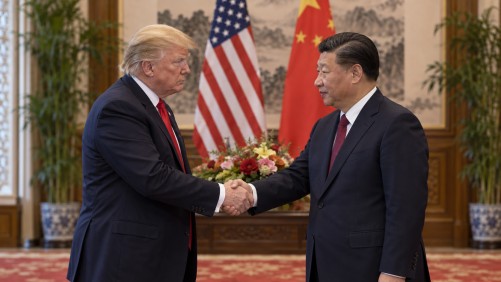
As global powers grapple with escalating tensions over trade, technology, and regional security, US President Donald Trump and Chinese President Xi Jinping are slated for a critical meeting on American soil. This engagement marks their second in-person dialogue this year, highlighting ongoing efforts to navigate the complex relationship between the United States and China. However, the expectation for breakthrough resolutions remains low, given the persistent disagreements between the two nations.
A key topic on the table is artificial intelligence (AI). The United States has taken steps to restrict China’s access to advanced semiconductors crucial for AI development, citing security concerns. Meanwhile, both nations acknowledge the importance of cooperation in AI governance, with US officials suggesting a framework for bilateral communication on AI safety. Despite these overtures, differing perspectives on AI risks and development continue to pose challenges.
Trade relations also loom large over the discussions. The impending expiration of a temporary trade agreement, which includes provisions on tariffs and Chinese rare-earth exports, has both countries looking to redefine their economic interactions. While Beijing is eager for stable, long-term trade relations, Washington views existing restrictions as a strategic tool in negotiations.
The contentious issue of Taiwan further complicates US-China relations. The United States has a history of defense collaborations with Taiwan, a stance that provokes strong opposition from China, which considers the island a part of its territory. The prospect of future US arms sales to Taiwan could exacerbate tensions during the Trump-Xi discussions.
Beyond bilateral issues, the meeting will likely address broader international concerns, such as the ongoing conflicts involving Iran and Ukraine. China’s economic ties with Iran and its strategic relationship with Russia add layers of complexity to these discussions.
As the world watches, this meeting underscores the delicate balancing act required to manage US-China strategic rivalry while maintaining lines of communication on pivotal global issues including trade, technology, and security.