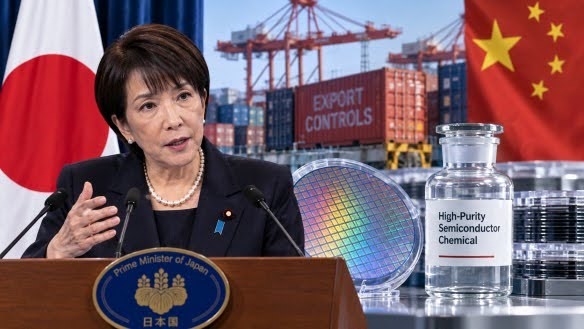
Japan has raised objections to China’s recent decision to impose stringent new export restrictions on dichlorosilane (DCS), a crucial chemical for semiconductor production. The Japanese government is currently evaluating how these measures might affect its domestic companies. Under these new rules, Chinese importers of DCS from Japan are required to make cash deposits of up to 99.2%, impacting key Japanese exporters like Shin-Etsu Chemical and Denal Silane.
The Chinese government has justified these actions as provisional, linked to an ongoing anti-dumping investigation. This investigation claims that Japanese exports of DCS have caused damage to China’s local industry. A final ruling on the matter will be reached once the investigation concludes. Meanwhile, Japan has called on China to ensure that these restrictions do not unfairly target Japanese businesses, warning that it may consider taking necessary actions in response.
The backdrop for this development is a deterioration in China-Japan relations, partly due to Japan’s stance on Taiwan. Beijing has also implemented other trade and export limitations affecting Japanese enterprises, especially concerning products that have dual-use potential for military applications. These restrictions add further tension to the already complex economic interactions between the two nations.
Dichlorosilane plays a critical role in semiconductor manufacturing, specifically in the formation of ultra-thin silicon layers and other materials on computer chips. With Japan being a significant global supplier of high-purity DCS, the Chinese restrictions are poised to have a considerable impact on the semiconductor supply chain, an industry already grappling with various global challenges.