
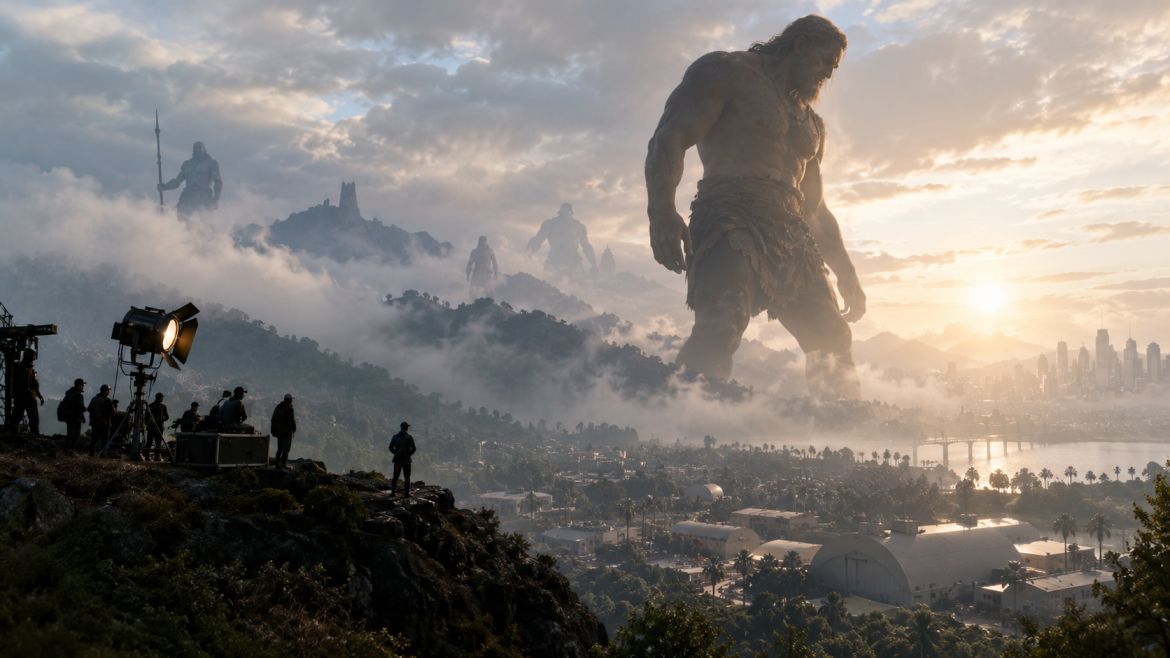
From the fearsome creatures of myth to the towering figures of superhero lore, cinema has long been fascinated with size. Films have transformed this fascination into unforgettable giants, each leaving a unique mark on viewers. Whether through the enchanting world of Roald Dahl’s “The BFG,” where Steven Spielberg brought the 24-foot Big Friendly Giant to life with Mark Rylance’s motion-captured performance, or the thrilling adventures in “Jack the Giant Slayer” with Nicholas Hoult confronting ancient adversaries, these films elevate the concept of gigantism to new heights. Similarly, in Peter Jackson’s “The Hobbit: An Unexpected Journey,” audiences are treated to a breathtaking, albeit brief, clash with stone giants, showcasing the perilous grandeur of Middle-earth.
The 1950s and 1960s introduced audiences to the awe and terror of oversized beings through classics like “The Amazing Colossal Man,” where an army colonel’s exposure to a plutonium explosion results in uncontrollable growth and psychological instability. Sci-fi cinema continued this fascination with colossal figures in “Attack of the 50ft Woman,” a film that has become iconic more for its imagery than narrative, with Allison Hayes portraying a woman transformed by an alien encounter into a towering avenger. Meanwhile, Jonathan Swift’s timeless tale found an animated adaptation in 1939’s “Gulliver’s Travels,” where the shipwrecked Gulliver discovers his imposing stature over the tiny inhabitants of Lilliput, blending fantasy with musical whimsy.
In the realm of fantasy, giants have served as both allies and adversaries. Tim Burton’s “Big Fish” introduces Karl the Giant, played by Matthew McGrory, as a gentle part of Edward Bloom’s fantastical life story, while in the animated “Monsters vs. Aliens,” Reese Witherspoon’s character, Ginormica, leads a quirky team to protect Earth. The psychological and emotional depths of giant characters were explored in Ang Lee’s “Hulk,” where Eric Bana’s portrayal balanced action with introspection, and in “The Iron Giant,” where Brad Bird’s animated masterpiece tells a moving tale of identity and sacrifice through a giant robot’s eyes.
More recent films have continued to reimagine giants in fresh contexts. David Lowery’s “The Green Knight” presents towering, mysterious figures that add an ethereal quality to its Arthurian narrative. Christopher Nolan’s upcoming “The Odyssey” promises a visceral encounter with the Cyclops Polyphemus, while George Miller’s “Three Thousand Years of Longing” uses Idris Elba’s djinn to explore themes of romance and myth, with the character’s size shifting fluidly. Such portrayals are often grounded in visually stunning effects, as seen in the iconic bronze guardian Talos from “Jason and the Argonauts,” a masterpiece of Ray Harryhausen’s stop-motion animation that remains a benchmark for depicting giants on screen.
In the rich tapestry of film history, giants have not only entertained but also enriched narratives with their larger-than-life presence. André the Giant’s portrayal of Fezzik in “The Princess Bride” exemplifies this, as his natural stature and warmth bring a beloved character to life without reliance on special effects. Whether through the ingenuity of practical effects or the emotive storytelling of animated adventures, these cinematic giants continue to captivate and inspire generations, cementing their place in the annals of film lore.