
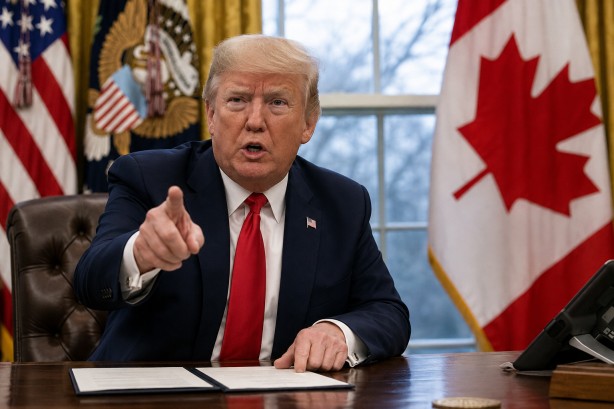
The trade dispute between the United States and Canada has intensified as President Donald Trump criticized the neighboring country following the collapse of recent negotiations. This development has led to the United States enforcing 50% tariffs on about $20 billion worth of Canadian imports, impacting a wide array of products.
Responding to these tariffs, Canadian Prime Minister Mark Carney has vowed to mirror these duties, underscoring that Canada will not acquiesce to the terms set forth by Washington. Carney characterized the escalating tensions as a trade war, accusing the U.S. of economically targeting Canada. Meanwhile, U.S. Trade Representative Jamieson Greer justified the tariffs, stating they are crucial for safeguarding American jobs and supply chains.
This trade conflict has sparked concern among businesses and lawmakers on both sides of the border. Canadian business organizations have expressed alarm over potential revenue reductions for exporters and small businesses. Concurrently, U.S. legislators, particularly those from border states, have raised alarms that the tariffs might lead to increased expenses for businesses, agricultural producers, and consumers.
Canada plans to implement its retaliatory tariffs on September 8, targeting products such as steel, dairy goods, appliances, and electronics. These measures are expected to further strain trade relations between the two nations.
The ongoing dispute has also cast doubt on the future of the US-Mexico-Canada trade agreement, which is a cornerstone in regulating a substantial portion of trade across North America. The uncertainty surrounding this agreement has added another layer of complexity to the already fraught economic relationship between the United States and Canada.