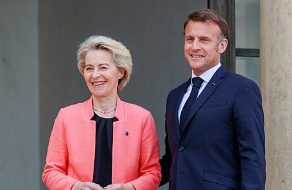
European Union leaders unanimously endorsed a “Buy European” policy framework during their strategic summit at a historic Belgian castle, marking a decisive shift toward protecting the continent’s manufacturing and technological capabilities. The gathering of all 27 member states focused intensively on reversing Europe’s competitive decline against the United States and China through coordinated industrial protection measures and regulatory reform.
Belgian Prime Minister Bart De Wever opened the summit with stark warnings about an “existential crisis” confronting Belgium, France, Germany, and the Netherlands, where factory closures and declining investment threaten economic foundations. He attributed these challenges to a toxic combination of high energy costs, regulatory overreach, and “Chinese dumping” of unfairly subsidized goods that undercut European manufacturers. His metaphor of European leaders “standing on the bridge of the ship, staring at the horizon, without touching the helm” captured the urgency demanding immediate policy action.
European Council President António Costa confirmed that leaders reached broad consensus on implementing European preference in carefully selected strategic sectors. These include defense, space exploration, clean technology, quantum computing, artificial intelligence, and payment systems—all areas considered vital to European sovereignty and economic security. Costa emphasized that the “Buy European” approach would be “proportional and targeted,” avoiding blanket protectionism while addressing specific vulnerabilities where European industries face unfair competition or strategic dependencies on unreliable partners.
Commission President Ursula von der Leyen promised to deliver a comprehensive action plan by March that extends far beyond procurement policies. Her package includes sweeping regulatory simplification at both EU and national levels, a revolutionary new corporate law framework called “EU Inc” designed to help startups scale across Europe, aggressive capital market integration to unlock investment, and concrete measures to reduce energy prices that have crippled European competitiveness. Von der Leyen expressed confidence that “the pressure and the sense of urgency is enormous and that can move mountains,” suggesting that previously impossible reforms might now succeed due to the severity of Europe’s competitive crisis.
The summit’s timing reflects multiple converging pressures that have transformed European economic thinking. The sudden loss of Russian gas in 2022 exposed dangerous energy dependencies, while Donald Trump’s trade wars demonstrated the risks of relying on partners who might turn hostile. Meanwhile, China’s massive state subsidies have created overcapacity in strategic sectors, flooding European markets with artificially cheap goods that threaten to destroy domestic industries. These challenges have made “Buy European” policies—once considered taboo protectionism—now appear as necessary defensive measures for economic survival and strategic autonomy.