
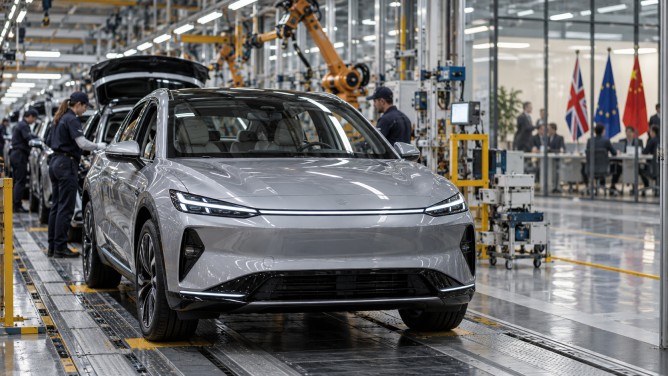
The United Kingdom is contemplating the imposition of tariffs on Chinese-made electric vehicles as part of its efforts to join the European Union’s proposed Made in Europe industrial initiative. This potential move has raised concerns from Beijing, which has cautioned against what it perceives as discriminatory trade measures targeting Chinese products.
The UK’s interest in joining the EU’s Industrial Accelerator Act is driven by the initiative’s aim to bolster European manufacturing. By prioritizing locally produced goods and addressing competition from subsidized imports, the act offers considerable advantages to participating countries. However, aligning with this program could require the UK to adopt EU trade defense measures, including tariffs on Chinese electric vehicles anticipated to be introduced by the EU in 2024. British officials have emphasized that discussions are still in the early stages and that the UK intends to maintain its independent trade policy.
China has voiced strong opposition to the potential tariffs, asserting that such actions could undermine free trade principles and breach international trade agreements. This development comes amidst a significant expansion of Chinese electric vehicle manufacturers within the UK market. British policymakers are concerned that not joining the EU initiative might weaken domestic automotive supply chains and jeopardize substantial trade volumes, potentially impacting billions of pounds in economic activity.
Participation in the EU scheme could provide UK manufacturers with a competitive edge against lower-cost imports and secure continued access to European supply chains. Nevertheless, the introduction of tariffs could lead to higher vehicle prices for consumers and provoke retaliatory measures from China, which might adversely affect UK carmakers exporting to the Chinese market.
The UK automotive industry heavily relies on exports, with about 80% of domestically produced cars sold overseas. More than half of these exports are directed to the European Union, underscoring the importance of maintaining strong trade ties with the bloc.
As the EU plans to advance the Industrial Accelerator Act by the end of 2026 or early 2027, negotiations regarding the UK’s participation and its potential trade policy obligations remain ongoing. The outcome of these discussions is anticipated to significantly influence future UK-EU industrial relations and trade dynamics with China.