
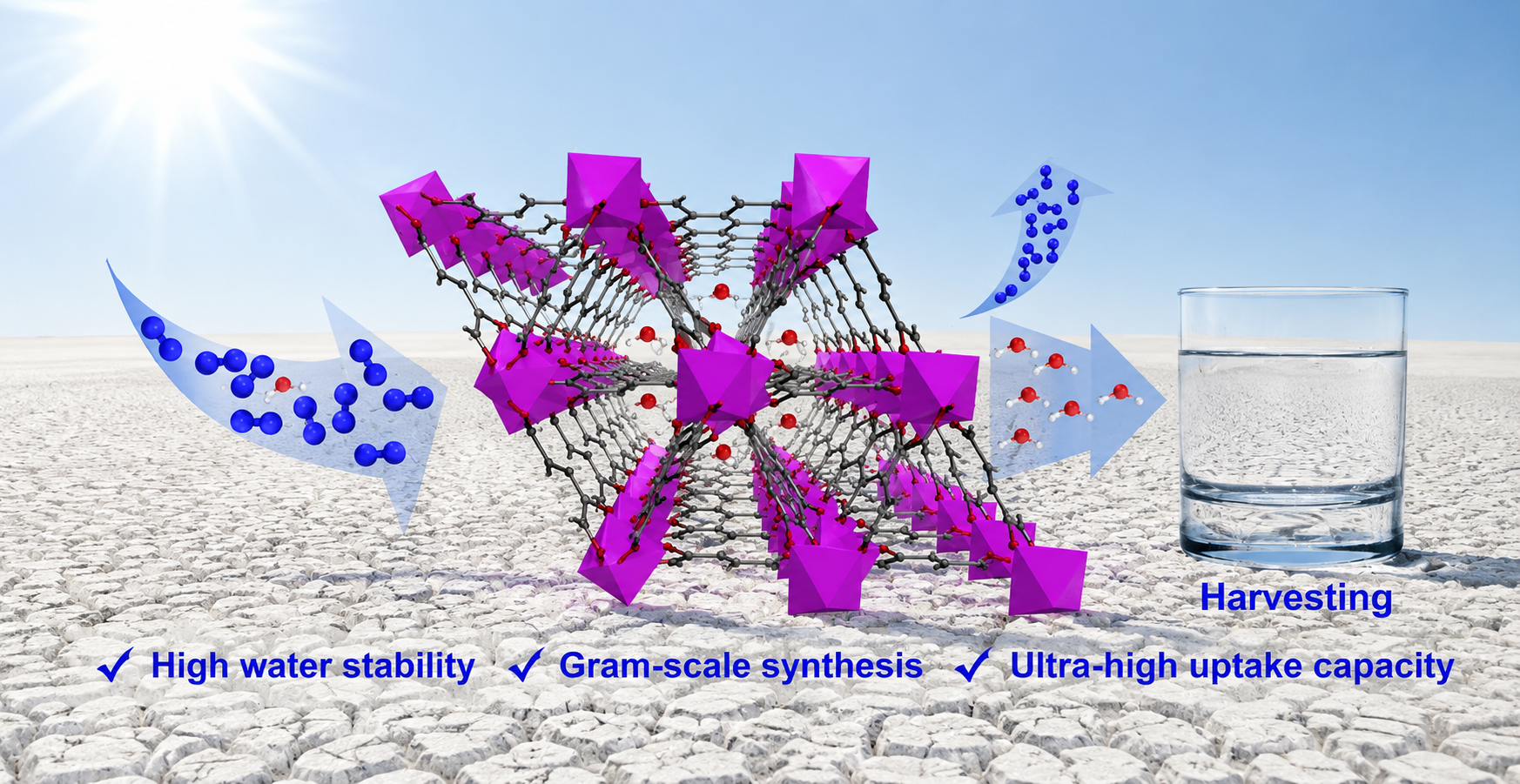
In a groundbreaking development, scientists have created a metal-organic framework (MOF) that can extract water from the atmosphere even in the driest of conditions, potentially revolutionizing water access in areas suffering from extreme scarcity. This innovative approach could provide relief to arid regions where traditional water harvesting methods are ineffective due to low humidity levels.
The research highlights gallate-based MOFs constructed from low-cost elements such as magnesium, cobalt, and nickel. The magnesium variant, known as Mg-gallate, emerged as the most effective, capturing 170 milligrams of water per gram at a mere 0.2% relative humidity. This marks one of the highest water absorption rates reported for porous materials under such low humidity conditions. Atmospheric water harvesting is gaining attention as a sustainable solution to the escalating global water crisis, particularly in desert-like environments where conventional adsorbents fail to perform adequately.
Mg-gallate not only excels in water adsorption but also remains stable over time. Tests showed that the material retained its structural integrity after 28 days in water and sustained performance across 20 cycles of adsorption and desorption. Additionally, its high selectivity for water molecules over nitrogen enhances its suitability for air-to-water extraction. Researchers attribute these capabilities to the hydrogen-bonding interactions between water molecules and the oxygen-containing groups within the MOF structure, along with the effects of ultramicroporous channel filling.
Produced on a gram scale using affordable raw materials and standard laboratory techniques, the Mg-gallate MOF offers promising potential for large-scale production. Its applications extend beyond atmospheric water harvesting in deserts; it could also be utilized in semiconductor dehumidification, electronics protection, natural gas dehydration, and even space-based water recovery systems. The research team suggests that gallate-based MOFs represent a promising strategy for developing high-performance materials capable of operating under some of Earth’s driest conditions.
The study was spearheaded by Professors Jianji Wang and Huiyong Wang at Henan Normal University, China, with significant contributions from researchers Rui Zhou, Xueli Ma, Yunlei Shi, Wei Lu, Dazhen Xiong, and Zhiyong Li. Specializing in the design and application of porous materials and ionic liquids, the team is dedicated to finding practical, scalable solutions for environmental challenges, including atmospheric water harvesting. Their work underscores a commitment to creating materials that are both effective and economical, furthering efforts to address water scarcity through innovative technology.
Legal Disclaimer: The information contained in this article has been provided by independent third-party contributors, clients, or content partners. We do not independently verify the accuracy, completeness, legality, ownership, licensing, or reliability of submitted content, including text, images, videos, trademarks, or other media materials. The submitting party is solely responsible for ensuring that all content, including images and media assets, complies with applicable copyright, trademark, licensing, and intellectual property laws. We disclaim liability for any unauthorized use of copyrighted or proprietary materials by third parties. If you believe that any content published on this platform infringes your intellectual property rights, kindly contact the author above for prompt review and resolution.